




Comparison of Three Anilox Roll Laser Cleaning Technologies
Large-Spot Laser Cleaning Technology
Large-spot systems typically combine a relatively large laser spot with slow roll rotation. With this approach, we estimate that cleaning a 1,360 mm roll takes 60–120 minutes. Incorrect overlap between adjacent laser spots can leave under-cleaned and overheated areas on the roll surface.
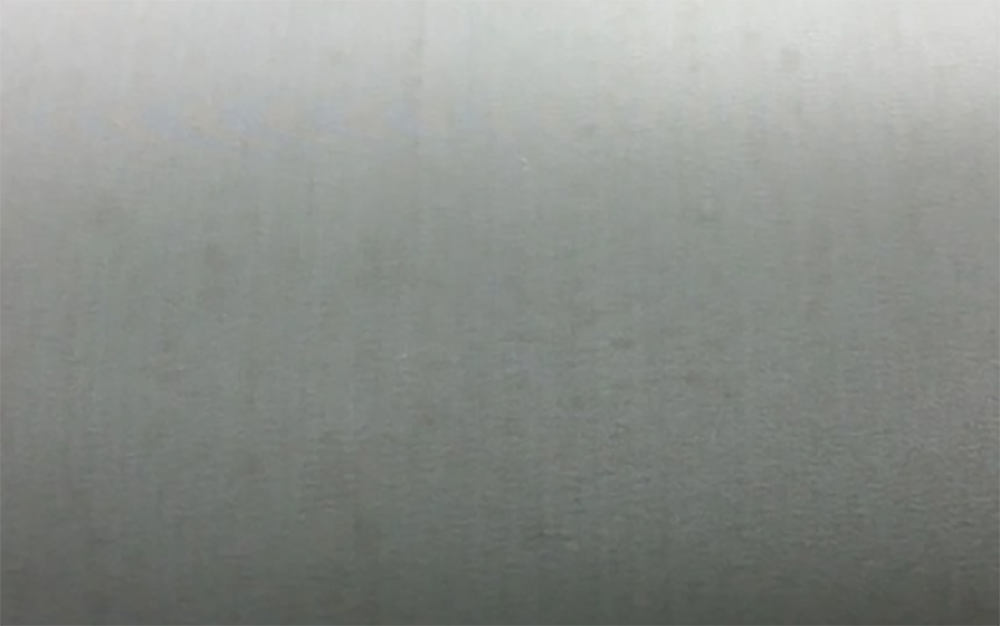 Large-spot cleaning. Dark under-cleaned areas and light overheated areas are visible.
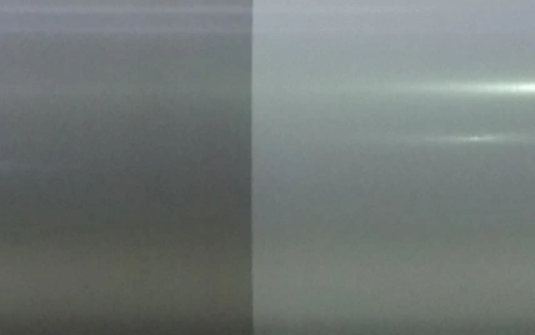 LaserEcoClean technology. Roll before cleaning (left) and after cleaning (right), showing uniform cleaning.
Beam-Scanning Laser Cleaning Technology
Some anilox laser-cleaning systems use short-range beam scanning. You can read how this method works in our technical article.
One pulse per point is sufficient for safe laser cleaning. With some scanning configurations, the same point may receive 3–15 pulses, which can overheat or melt the ceramic surface of the anilox roll.
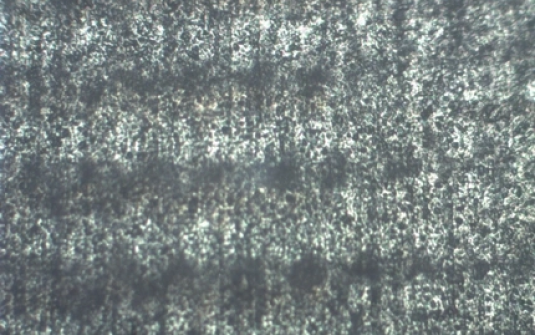 Beam-scanning technology. Dark and light areas at 200× magnification on a cell-free section of the roll.
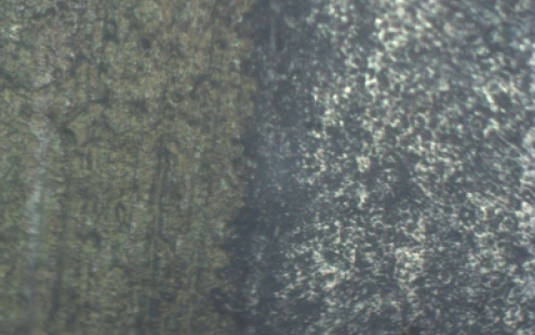 LaserEcoClean technology. Cell-free roll area at 200× magnification. The contaminated area is on the left and the cleaned area on the right. Individual laser spots are practically invisible.
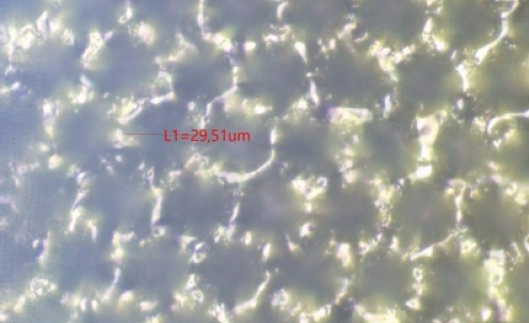 The roll surface shows signs of melting
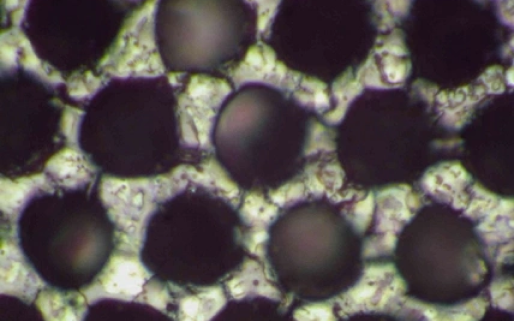 The roll surface shows signs of melting
LaserEcoClean Laser Cleaning Technology
LaserEcoClean uses a small laser spot of approximately 100 µm and rapid roll rotation to scan the surface with minimal overlap. Our laser source distributes energy uniformly across the spot. The result is uniform cleaning both visually and under a microscope. The process cleans not only the cells but also microscopic surface features on the cell walls, restoring the roll’s cell volume to its original specification. Our 2020 research confirmed that the same clean anilox roll can be cleaned more than 60 consecutive times without damaging the ceramic surface.
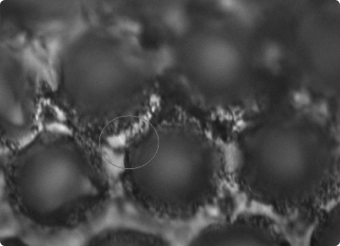 Before cleaning
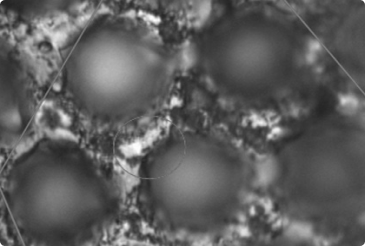 After 5 cleaning cycles
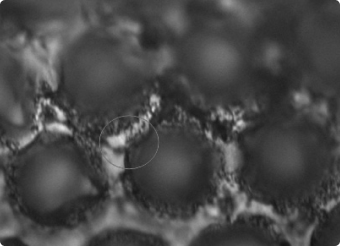 After 10 cleaning cycles
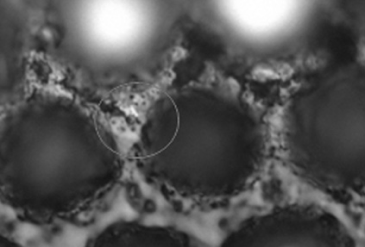 After 40 cleaning cycles