




08. How anilox cell walls are thermally damaged during laser cleaning
1. Introduction
In October 2025, we analysed rolls cleaned in a third-party laser cleaning machine manufactured in 2024.
Although the manufacturer states that the safety of its cleaning process is supported by extensive research, our roll inspection identified signs of altered cell-wall geometry and reduced cell volume.
The safety of laser cleaning depends on the laser type, wavelength, pulse repetition rate, pulse duration, the optical system used to focus the beam, anilox roll rotation speed, laser-head travel speed along the roll, focal distance, beam-scanning method, and the mechanical systems that move the laser head and rotate the roll.
More than seven parameters determine cleaning safety, and every one of them is critical to a safe laser cleaning process.
Our company has developed an anilox roll laser cleaning technology that differs fundamentally from other solutions. We have researched anilox roll laser cleaning since 2010 and have cleaned more than 100,000 rolls and installed 68 machines worldwide. We have not received a single customer complaint concerning cleaning safety. To the best of our knowledge, we are the only company that demonstrates and explains how local melting develops on anilox rolls, using a microscope with magnification up to 800×.
We first established every parameter required for a safe process and only then brought our technology to market.
A fleet of 100 or more anilox rolls costs a printing company over €300,000 and is expected to last three to five years. Reducing that service life through thermal damage to the ceramic can significantly affect the company’s profitability, which in our view is a serious drawback.
2. What the roll looks like before cleaning
We will begin by examining, step by step, how incorrectly selected laser parameters can cause thermal damage to an anilox roll’s ceramic coating through local melting.
The image shows a new roll before cleaning.
Microscope magnification: 400×.
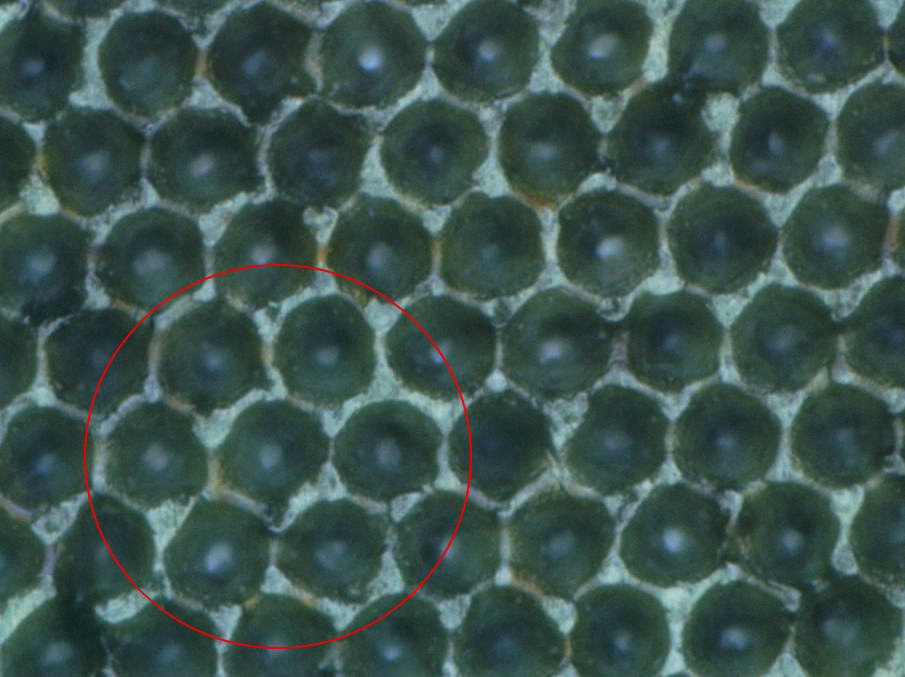
Let us examine the highlighted area in greater detail:
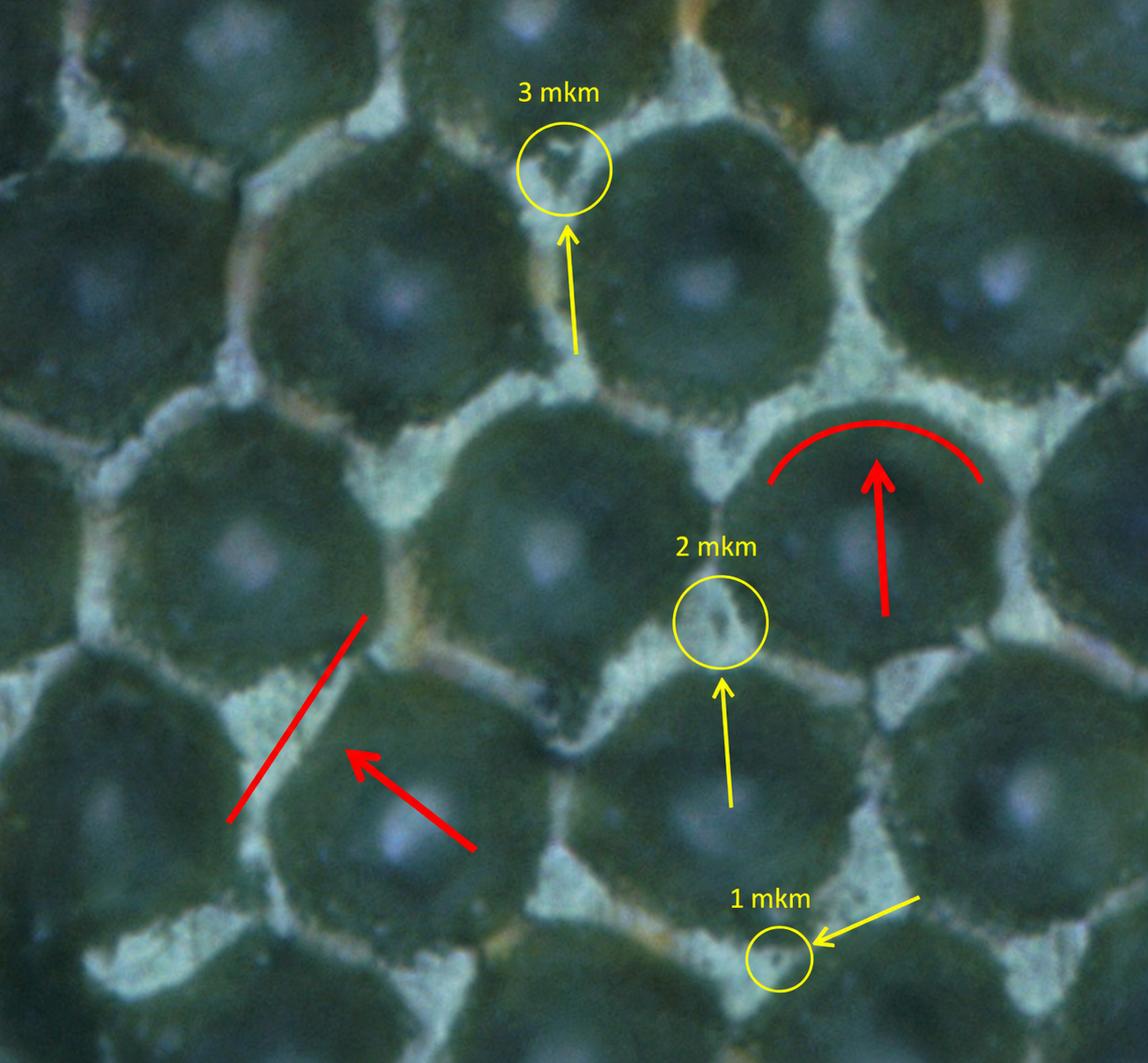
The green arrows and circles mark fine features on the cell walls measuring 1, 2 and 3 μm.
The yellow arrows indicate the sharp, even cell edges.
3. The roll after its first cleaning in a third-party machine manufactured in 2024
The earliest stages of melting are not visible at magnifications below 400×.
This is the first stage of thermal damage to the cell walls caused by local melting. In the equipment examined, the combination of a spot more than 100 μm in diameter and the cleaning parameters used produced signs of melting after the first pass.
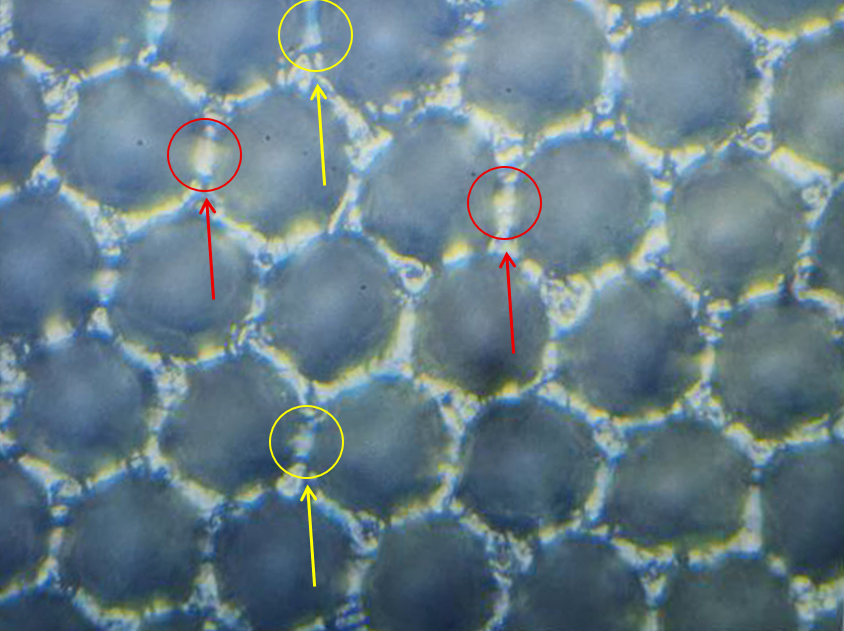
The initial stages of melting are not obvious at first glance. The following features are worth examining:
- The laser begins to melt the fine features on the anilox cell walls. Features measuring 1–2 μm disappear, and the surface undergoes laser polishing. The ceramic becomes less rough and takes on a mirror-like appearance. These areas are marked with red circles and arrows in Figure 3.
- To a customer, such a roll may look ‘cleaner’ because the melted ceramic reflects more light, making the roll appear brighter than one cleaned without surface damage.
- Thin oxide films appear on the ceramic surface. The discoloured cell walls are marked with yellow arrows in Figure 3.
4. Further stages of thermal damage to the ceramic (3–6 months of cleaning)
The next stages of thermal damage caused by local melting appear as follows:
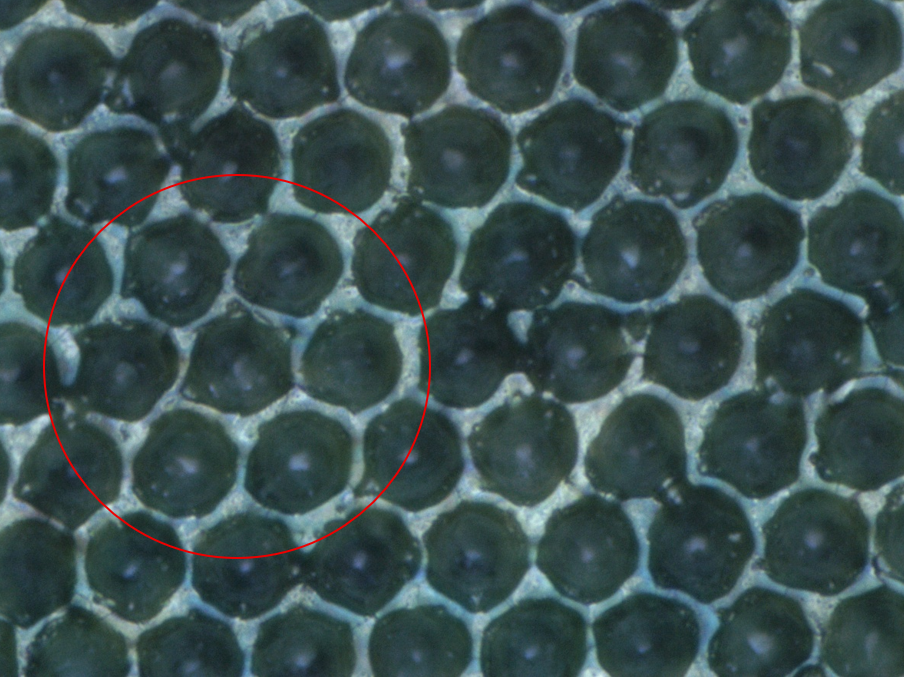
Let us examine the highlighted area in greater detail:
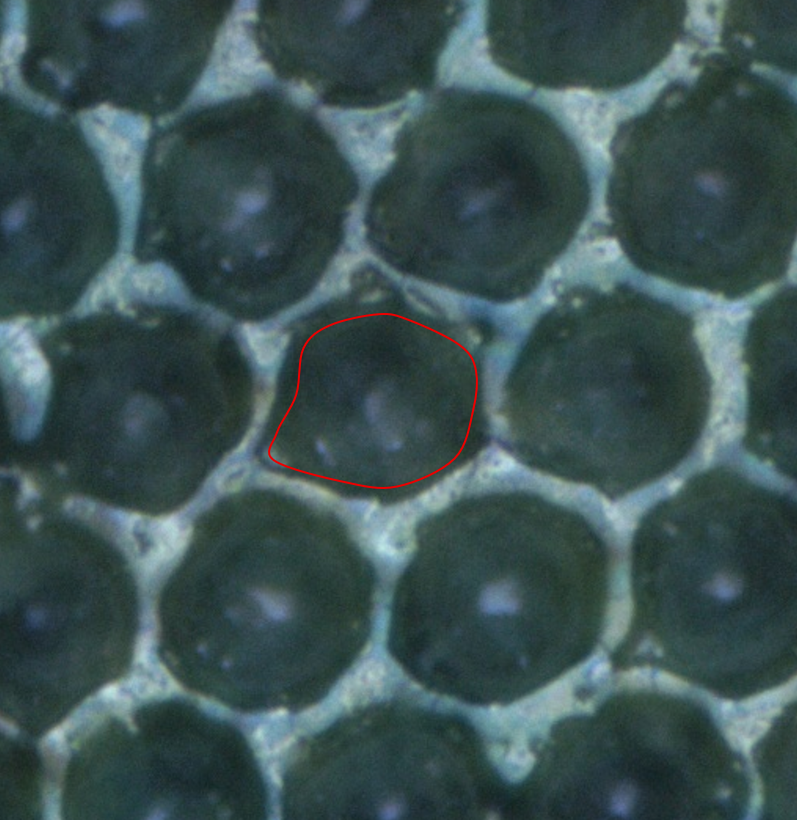
Fine features on the cell walls are no longer present.
Larger features on the cell-wall surface have also become smoother.
The cell walls become thicker.
The anilox cells no longer have sharp, even edges.
Blue oxides, indicating that the ceramic has overheated, are visible on every cell wall along the full length of the roll.
The roll’s cell volume has decreased, but it still functions as an anilox roll.
5. Roll after local melting (6–12 months of cleaning)
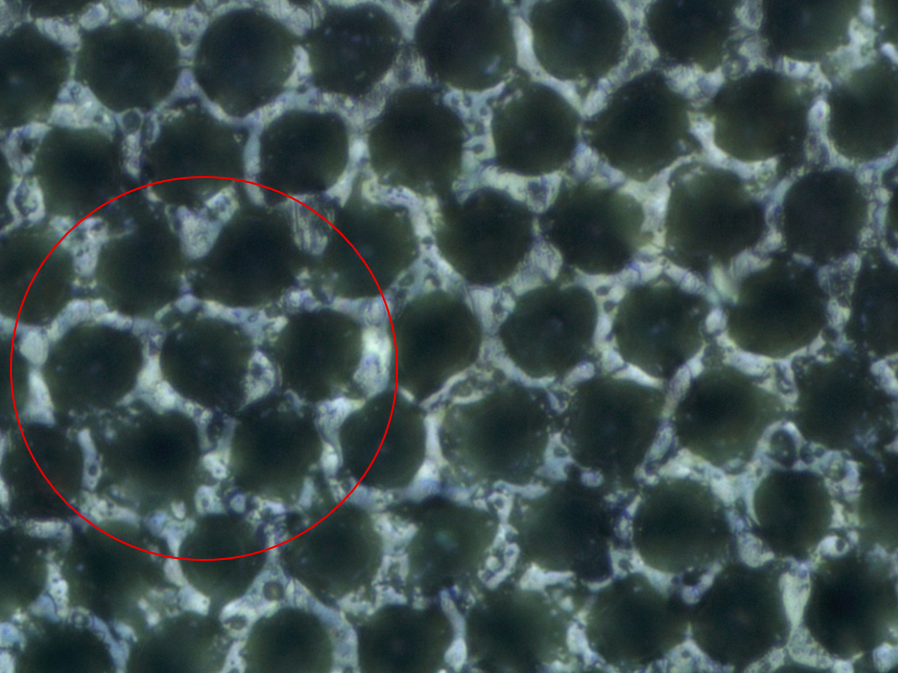
The cells become shallower, the cell walls become thicker and the cell openings become smaller.
As a result, the roll transfers significantly less ink.
6. Rolls after cleaning in a third-party machine manufactured in 2024, after 12–18 months
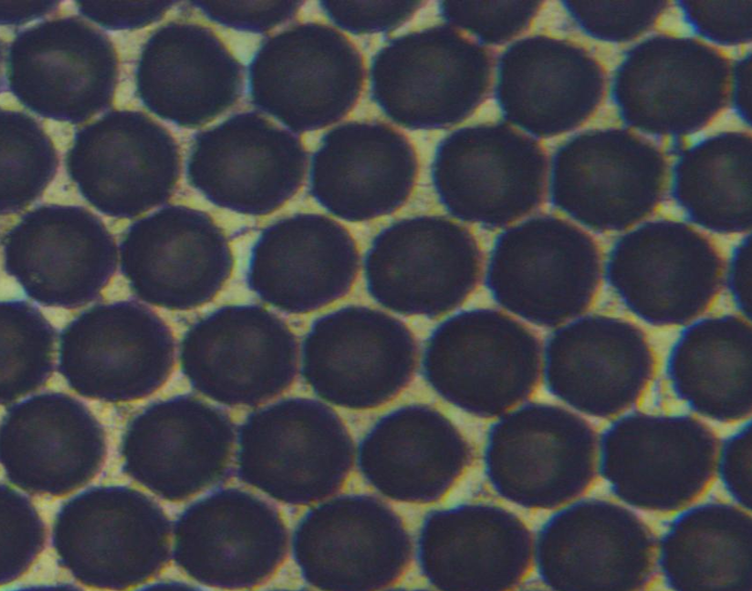
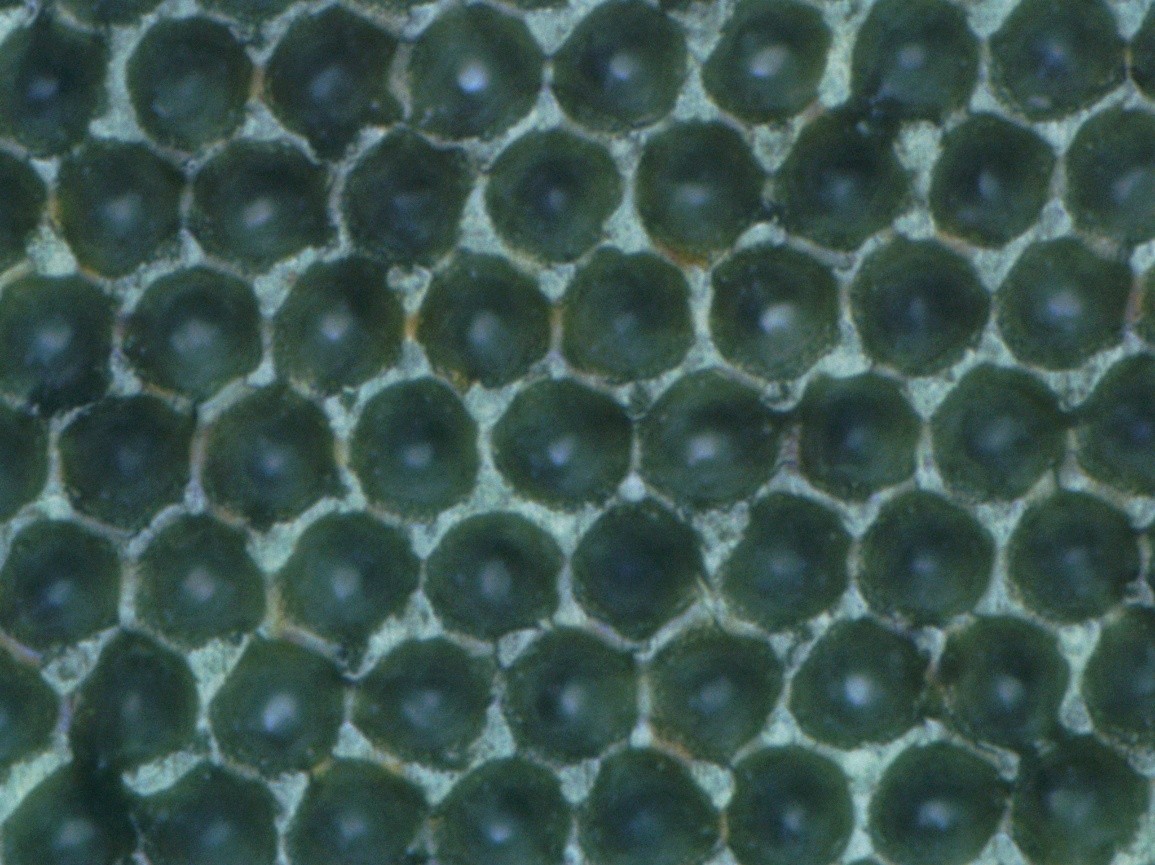
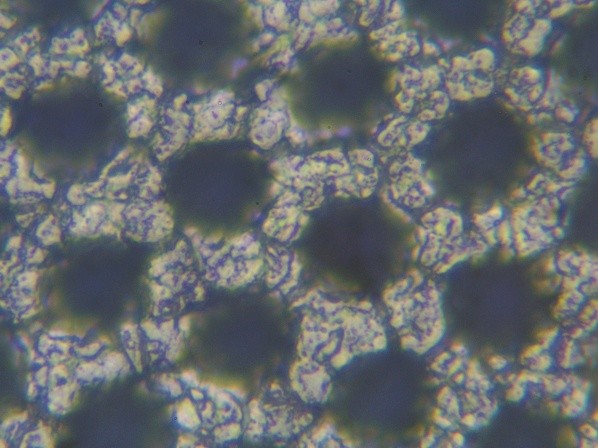
At this stage, the melting is visible at 200× magnification with Troyka inspection equipment.
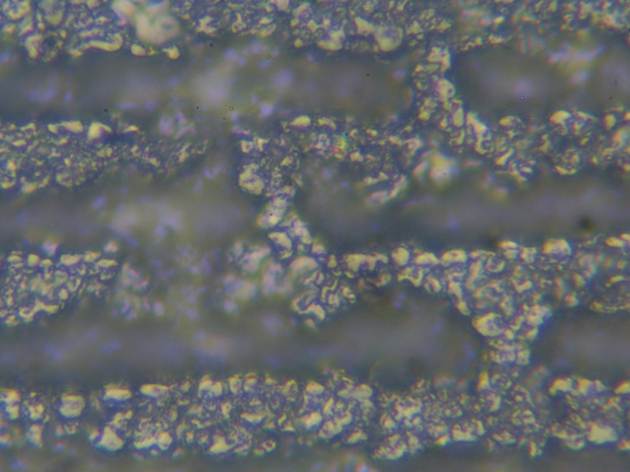
showing local melting after 18 months of cleaning in a third-party machine.
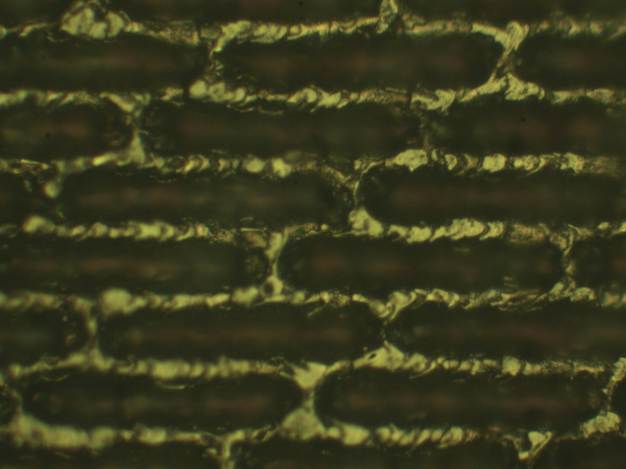
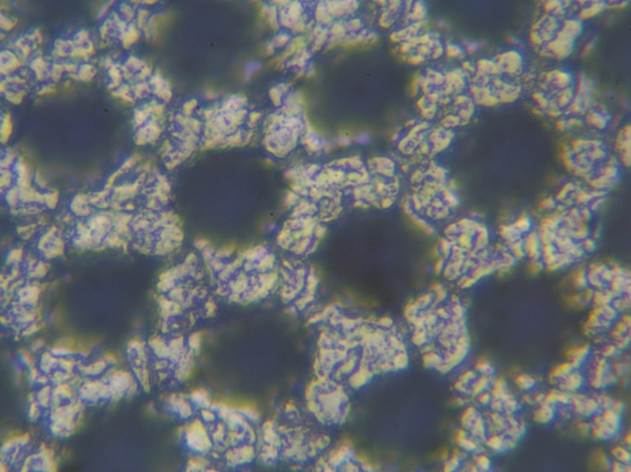
showing local melting after 18 months of cleaning in a third-party machine.
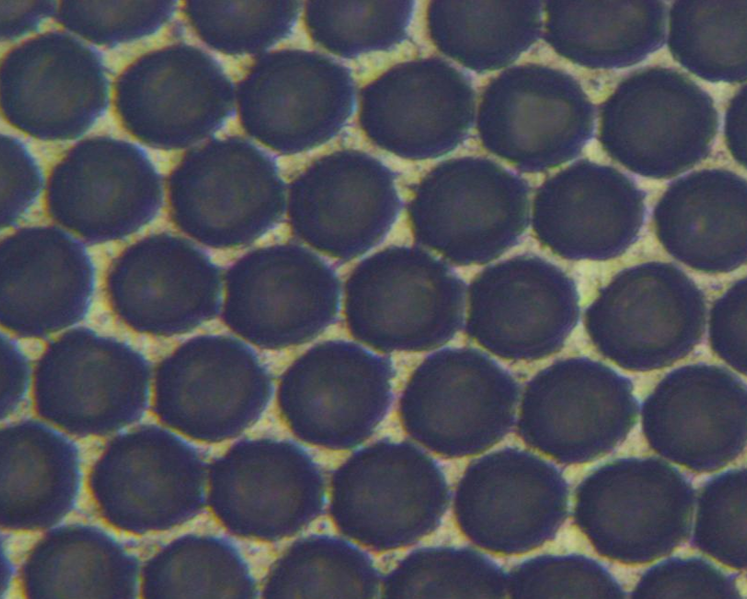
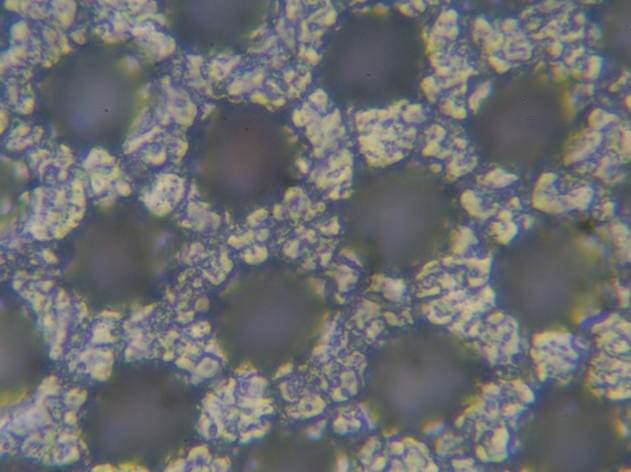
showing local melting after 18 months of cleaning in a third-party machine.
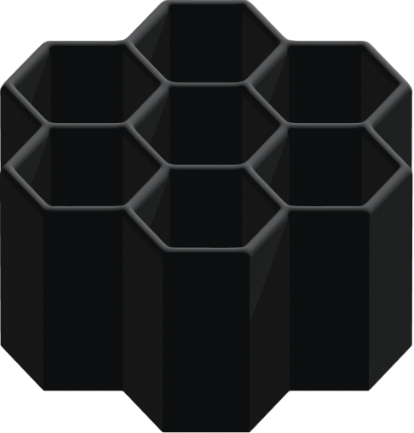
7. Schematic of the roll-melting process
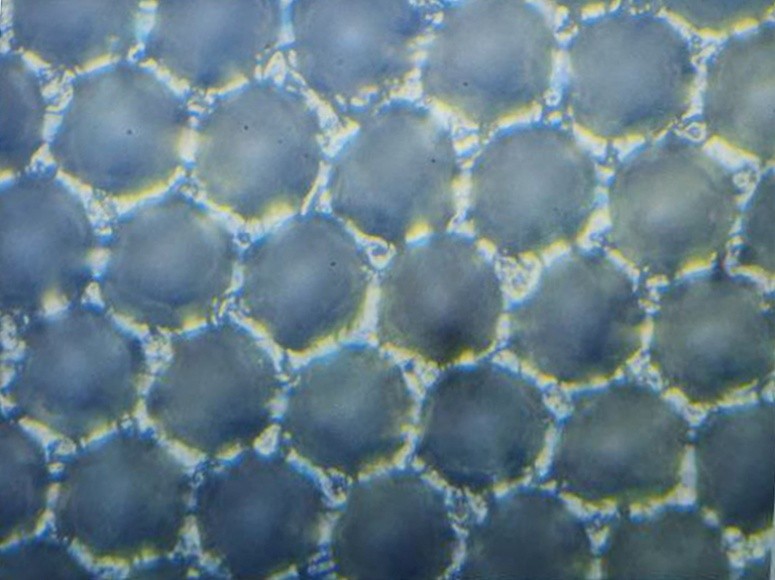
| Before Cleaning |
|
|
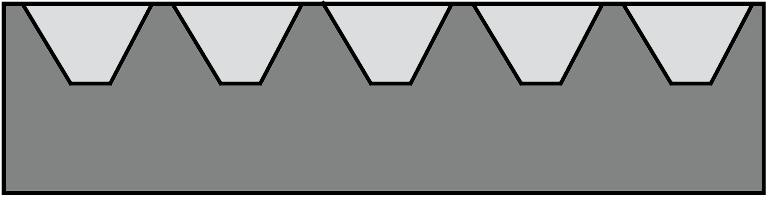 Line screen: 360 lpcm;
Cell-opening diameter: 24 μm; Cell-wall width: 4 μm; Depth: 18 μm; Cell-wall-to-opening ratio: 1:6; Volume: 4.1 cm³/m² (100%). |
| After Several Cleaning Cycles |
|
|
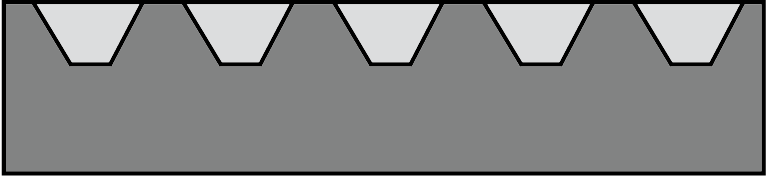 Cell-opening diameter: 23 μm;
Cell-wall width: 5 μm; Depth: 17 μm; Cell-wall-to-opening ratio: 1:5; Volume: 3.4 cm³/m²; Reduction: 17%. |
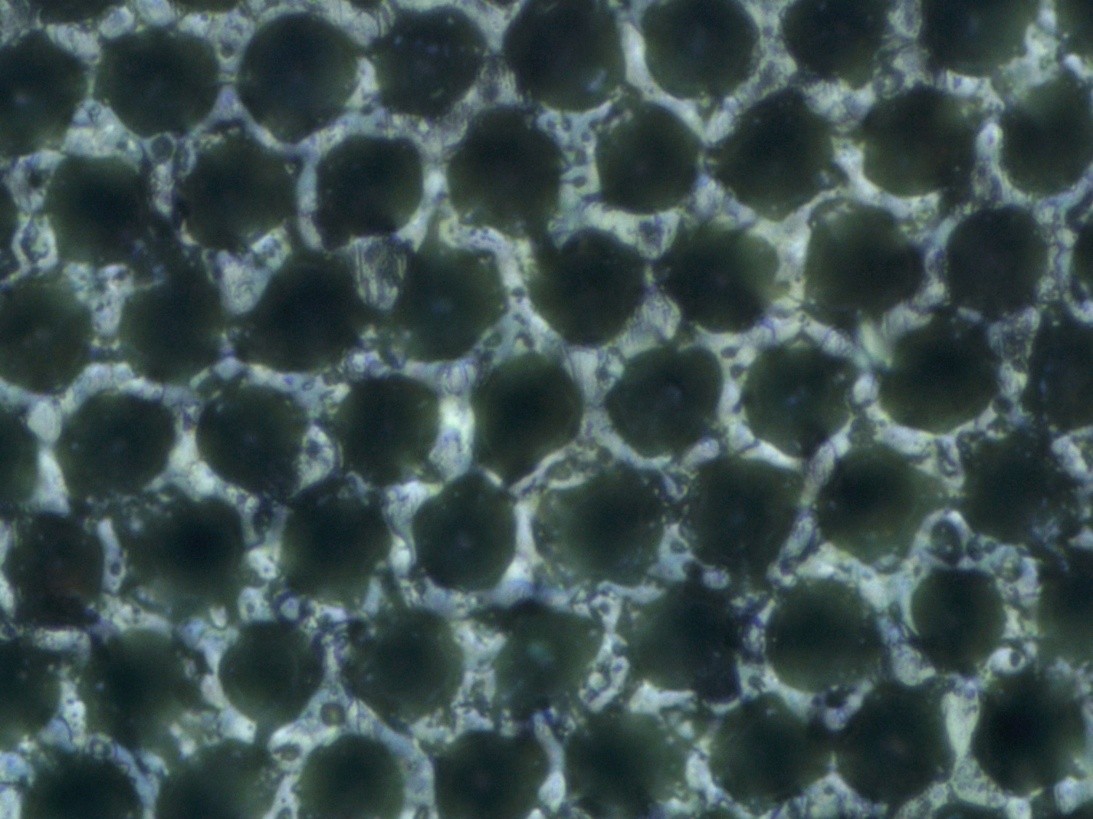
| After 6–12 Months of Cleaning |
|
|
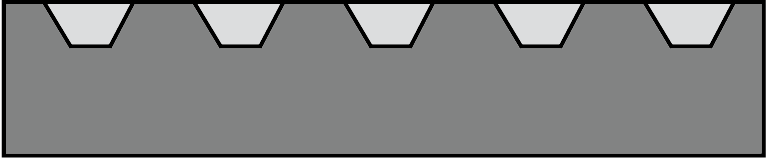 Cell-opening diameter: 20 μm;
Cell-wall width: 8 μm; Depth: 15 μm; Cell-wall-to-opening ratio: 1:3; Volume: 2.1 cm³/m²; Reduction: 50%. |
| After 12–18 Months of Cleaning |
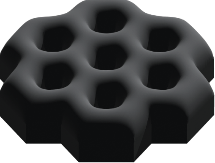
|
|
 Cell-opening diameter: 18 μm;
Cell-wall width: 10 μm; Depth: 13 μm; Cell-wall-to-opening ratio: 1:1.8; Volume: 1.5 cm³/m²; Reduction: 63%. |
In our view, anilox roll laser cleaning without inspection at magnifications up to 800× is unacceptable, because the result must be checked on every roll.
Our company has cleaned more than 100,000 anilox rolls and developed parameters for every line-screen range and ink type. All our equipment operates automatically, eliminating human error when cleaning parameters are selected.
8. How rolls should look after repeated laser cleaning
We have repeatedly conducted tests for our customers in which clean rolls were cleaned 40, 60 and 100 times. Two of our customers cleaned a single roll continuously for 24 hours to verify the safety of the process.
Below is an example of a clean roll subjected to more than 60 cleaning cycles. When a contaminated roll is cleaned, more of the laser energy is absorbed in removing the ink. To the best of our knowledge, no other company has repeated a test involving more than 60 cycles on a clean roll, because with no contamination present the energy is transferred to the ceramic, creating a risk of damage. We have calibrated our cleaning parameters so precisely that even after 60 cycles, the finest details and sharp features remain on the cell walls.
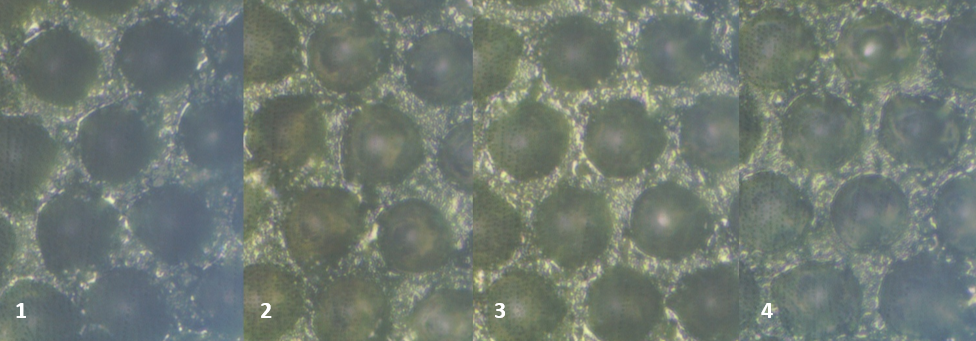
1 — roll before cleaning; 2 — roll after 60 cycles using settings for high-line-screen rolls; 3 — roll after 60 cycles using settings for medium-line-screen rolls; 4 — roll after 60 cycles using settings for low-line-screen rolls (maximum power).
As the images show, the cell walls remain in perfect condition after 60 cleaning cycles on a clean roll, even at maximum laser power.
You do not have to take our word for it. We do more than guarantee roll safety: we manufacture a microscope with magnification up to 800× and inspect every roll. Customers can take their own before-and-after images, and we explain exactly what to check so that safety is verified by evidence rather than marketing claims — whether the cleaning is performed by us or by anyone else.
9. Why does LaserEcoClean equipment not damage anilox rolls?
Our company uses a fundamentally different laser beam-scanning system, which we have patented in Germany.
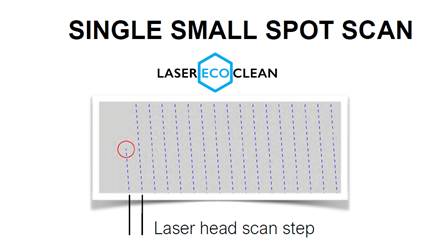
- Our beam-scanning system delivers one short pulse, focused to a spot smaller than 100 μm, to each point on the roll with the minimum required pulse energy. We have selected the parameters so that one pulse carries enough energy to vaporise the ink (400°C), but not enough to melt the roll’s ceramic surface (2,435°C).
- LaserEcoClean machines use a rotation system with minimal runout;
- we maintain the laser focus within ±90 μm;
- we use precision motion systems so that, over a cleaning length of up to 2,900 mm, the focal distance deviates by no more than a few hundred microns.
On two occasions, our customers tested continuous cleaning of a clean 400 lpcm roll for more than 24 hours.
The result was positive: no melting occurred.
We have been in the market since 2010. LaserEcoClean technology is used by more than 1,000 printing companies worldwide.
As of 2026, 68 LaserEcoClean machines have been installed worldwide, with no complaints concerning cleaning safety. Every year, we inspect our customers’ rolls using an 800× microscope.
Our engineers devoted enormous effort to developing a safe, precise and reliable anilox roll laser cleaning machine because we understand our responsibility for the investment our customers have made in their anilox rolls.
For a fleet of 100 or more rolls, that investment runs into hundreds of thousands of euros.